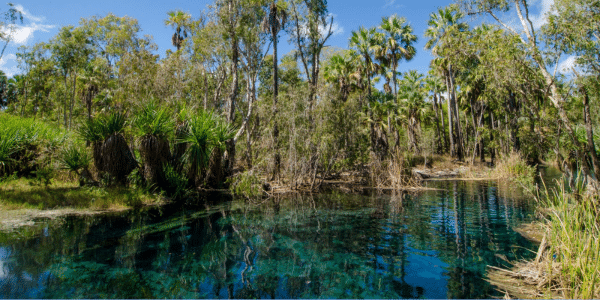
Underground water plays a vital role in Australia’s ecology. Closely connected to the water we see above ground, it sustains rivers, wetlands and other ecosystems, particularly during dry periods. Largely hidden from view, its ecological significance is often overlooked, along with the growing threats to groundwater-dependent ecosystems from extraction, contamination and climate change.
As Nature Impact Collective enters the final year of our four-year funding focus on freshwater and coastlines, we wanted to delve deeper into this often-overlooked aspect of our waterways and explore where environmental philanthropy can play a role in its protection.
To help us better understand the issues, we invited Alex Vaughan, Policy Advocacy Coordinator at Arid Lands Environment Centre, and Dr Dan Schulz, Freshwater Project Officer at Environs Kimberley, to share their knowledge and insights with our Collective and fellow environmental funders.
The discussion explored the ecological importance of groundwater, the threats it faces across northern and central Australia, lessons learned from the Murray–Darling Basin and opportunities to strengthen its protection. Here, we share some of the key opportunities for action that emerged from the discussion, particularly for environmental philanthropy.
Strategies and opportunities for protecting groundwater
Dan and Alex highlighted significant gaps in water planning and regulation, particularly across northern Australia, where existing frameworks fail to adequately protect groundwater-dependent ecosystems.
Strengthening water laws is a key priority, particularly where current arrangements allow large volumes of water to be allocated to agribusiness and other industries, including fracking, for free, and without sufficient environmental safeguards. Dan and Alex also emphasised the need for comprehensive river system planning that prioritises ecological health, rather than relying primarily on water allocation plans to manage competing demands.
An important opportunity lies in supporting affected communities in: challenging development proposals, documenting environmental impacts and telling the stories of places and ecosystems that many Australians rarely see.
The successful legal challenge to the Singleton Station water licence in the Northern Territory demonstrated the power of First Nations leadership, community action and strategic legal advocacy. While an important victory, efforts continue to prevent similar licences from being granted.
Collaboration between environmental organisations is also critical. Through the Northern Australia Conservation Alliance, organisations are coordinating efforts to challenge new gas and fracking proposals and intensive agribusiness water use while advocating for stronger water protections at a systemic level.
For environmental philanthropy, the discussion reinforced the importance of sustained support for organisations undertaking this complex, long-term work. Effective groundwater protection requires a combination of local knowledge, community relationships, scientific research, policy expertise and advocacy. Flexible, long-term funding can help organisations build and maintain this capacity, respond to emerging threats and pursue lasting policy change.
Find our more:
Environs Kimberly – Protecting the Martuwarra Fitzroy River
Arid Lands Environment Centre – Ground Water Campaign
Contact us at [email protected].
Photo: Bitter Springs, Roper River catchment, Mataranka by Glenn Walker