
Freshwater ecosystems have been the main focus of our first years as a nature funder collective. It has been a fascinating and enriching experience, learning together how best to support a key, often under-appreciated, ingredient in landscape and ecosystem health.
Through funding outstanding organisations and engaging other funders, we have made important inroads into protecting Australia’s precious, intact freshwater ecosystems while bringing over-exploited water systems back to life.
Now, as we enter the final year of our Resilient Waterways and Thriving Coastlines funding focus, Nature Impact Collective is looking towards our next chapter. We are currently in the midst of a funding strategy transition, focusing on the 2030 targets under the Convention on Biological Diversity’s Kunming-Montreal Global Biodiversity Framework.
The Australian government has committed to halt and reverse biodiversity loss by 2030 and to live in harmony with nature by 2050. There are two important targets the government needs to meet:
- Restoration: ensuring priority degraded areas are under effective restoration by 2030
- Protection: protecting and conserving 30% of Australia’s landmass (including waterways) and marine areas by 2030, commonly known as 30×30
Philanthropy has a unique opportunity to strategically apply funding to ensure our government delivers on their international commitments, bringing about much needed biodiversity outcomes. As a funder collective with a proven model, Nature Impact Collective is ideally positioned to bring together the collective knowledge and networks of our members with the expertise and knowledge of the wider sector to address this challenge.
NIC members will come together in March 2027 to consider and agree on the first stage of our transition, with the aim of making our first collective giving allocations under the new focus in late 2027. Building upon our learnings from previous rounds, we will explore the intersection between waterway health, and ecosystem protection and restoration.
An important part of this work will be considering how philanthropy can help ensure the National Reserve System is comprehensive and representative of Australia’s diverse ecosystems. This will require us to deepen our understanding of the different approaches to protecting land, water and marine environments, including Indigenous Protected Areas, National Parks and Reserves and private land conservation.
The challenge of halting and reversing biodiversity loss by 2030 is immense, but so too is the opportunity for philanthropy to contribute. We look forward to building on our first four years of collective giving, bringing new perspectives and shared ambition to the next chapter of our work for Australian nature.
Contact us at [email protected].
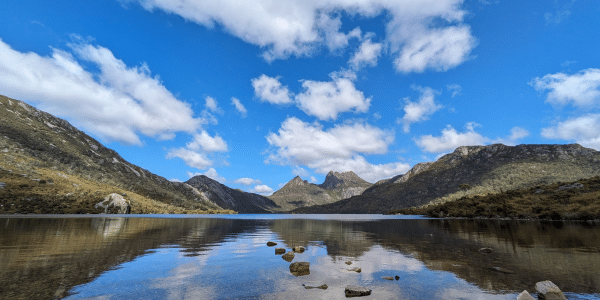
Photo: Dove Lake, Cradle Mountain Tasmania. Courtesy of Environment Tasmania.